×

How subscription works

1
Choose Your Plan

Select the quantity of packs you need each cycle.

2
Select Your Frequency

Set how often you would like them delivered.

3
Save every cycle

Enjoy exclusive savings on every subscription order.

4
Automated delivery

Your packs arrive at your doorstep, right when you need them.

5
Pause or cancel anytime

You will be charged automatically each month but you're in control, always.

×
10% OFF!
Say hello to your new favorite pad. Sign up and get 10% off your first order! Join our community <3
+91
Join Papaya!
×
FIRST10!
Use this code at checkout!
Copy coupon code
How to Choose a Pad for Sensitve Skin – Papaya Blood-Solidifying Pads Skip to content
How to Choose a Pad for Sensitve Skin

How to Choose a Pad for Sensitve Skin

If you've finished a period with a rash, persistent itching, or that vague soreness that lingers for days, the problem probably isn't your skin. It's the pad, specifically what it's made of.

The skin of the vulva and surrounding area is thinner, more permeable, and more reactive than skin elsewhere on the body. It carries a higher density of nerve endings, absorbs topical substances faster, and stays warm and enclosed for most of the day.

People without formally diagnosed sensitive skin can still react here in ways they wouldn't react elsewhere. Sensitive-skin pads aren't a niche product for a narrow group. They're closer to a baseline requirement.

A Soft Cotton Top Sheet

The layer touching your skin matters most. Most conventional pads use a synthetic polypropylene top sheet: cheap, functional, and not built with skin contact in mind.

Cotton creates less friction during hours of wear and movement. It also breathes better, which cuts the heat and moisture build-up that triggers irritation in the first place. Papaya uses an organic cotton top sheet for this reason. No synthetic polymer fibres, no plastic film, none of the processing residue that comes with conventional nonwoven sheets.

No Synthetic Fragrance 

Synthetic fragrance is a common contact allergen, and it has no reason to be in a product pressed against vulval skin for hours.

If you're using a fragranced pad and dealing with itching, redness, or soreness, switching to fragrance-free is the first thing to try. The difference often shows up within a single cycle. Fragrances aren’t just irritants to the skin but can also cause hormone disruptions. Which is why when building papaya pads we skipped fragrance altogether. No added scent, no masking compound to cover the smell of raw materials. You need to be comfortable on your periods not smell like florals and spring.

No Plastics, No EDCs 

Most mainstream pads contain plastic in multiple layers: top sheet, backsheet, often the absorbent core too. Several compounds tied to plastic manufacturing and degradation are endocrine-disrupting chemicals, capable of affecting hormones and reproductive health. Skin ij in the vulva absorbs topical substances more readily than most skin on the body, and years of daily contact add up.

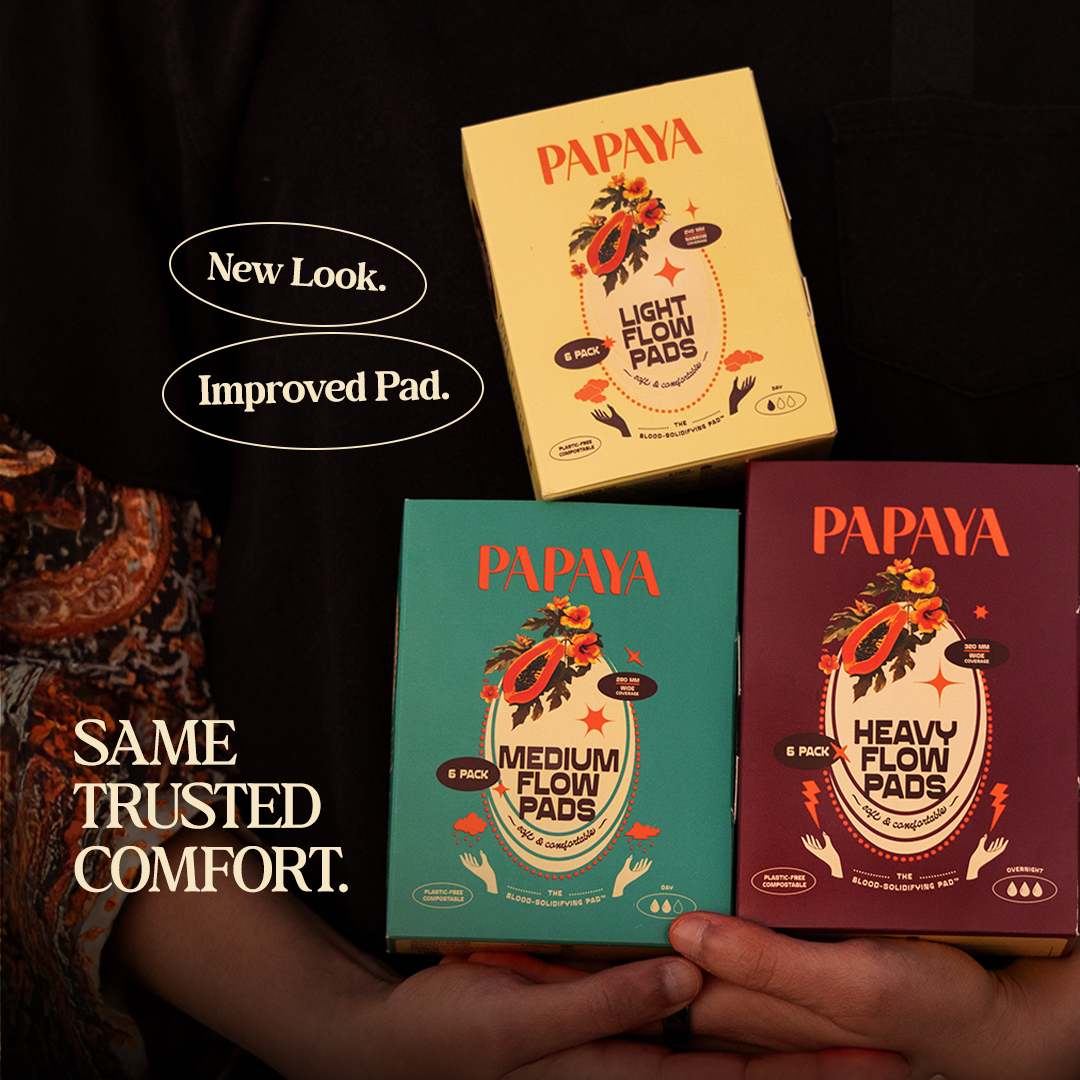
Papaya pads use no plastic and no EDCs in any layer. The top sheet is organic cotton, the core runs on cellulose and a natural biocoagulant, and the backsheet is biodegradable rather than polyethylene. For sensitive skin this removes an entire category of chemical irritant from a product worn against the body's most reactive tissue.

Breathable Construction 

A breathable pad lets heat and humidity escape instead of trapping them. A hot, damp, sealed environment breaks skin down faster and makes it more reactive to whatever else is in contact with it.

The backsheet should let vapour pass while still holding leak protection and paired with a cotton top layer, it would cut down on most of the conditions behind period-related skin reactions.

Reduced Rewet through Coagulation Technology

There's a less obvious factor behind skin reactions: rewet. Once the absorbent core saturates, conventional pads can push fluid back to the surface under pressure. Your skin ends up back in contact with moisture again and again through the day.

That’s where our innovation has changed the playbook. Papaya's biocoagulant core clots blood inside the pad instead of holding it as free liquid. The surface stays dry to the touch even while flow continues and there is no squeeze out. The less repeated dampening means less maceration and less friction damage, which helps even people whose main issue is mechanical rather than chemical. The biocoagulant also carries antimicrobial and antifungal properties, cutting the bacterial activity that builds up over hours of wear.

What to Avoid 

A few things worth checking on the label: synthetic fragrance or an "odour neutraliser" listed as a chemical compound, a polypropylene or film top sheet with no cotton component, chlorine-bleached pulp, a "hypoallergenic" claim with no materials disclosed, plastic in any layer including the backsheet or core, and any compound flagged as an EDC.

Testing a New Pad 

Give a new pad a full cycle before drawing conclusions. Skin takes time to recover from prior irritation, and a reaction from one pad can bleed into the next cycle after switching.

Redness or itching concentrated where the pad sits usually means a material or chemical reaction. Soreness at the inner thighs points to friction, often from synthetic material or trapped moisture. A persistent damp feeling points to a breathability or rewet problem. Organic cotton, no fragrance, no plastic, and coagulation-based absorption address all three at once.

Previous Post Next Post