×

How subscription works

1
Choose Your Plan

Select the quantity of packs you need each cycle.

2
Select Your Frequency

Set how often you would like them delivered.

3
Save every cycle

Enjoy exclusive savings on every subscription order.

4
Automated delivery

Your packs arrive at your doorstep, right when you need them.

5
Pause or cancel anytime

You will be charged automatically each month but you're in control, always.

×
10% OFF!
Say hello to your new favorite pad. Sign up and get 10% off your first order! Join our community <3
+91
Join Papaya!
×
FIRST10!
Use this code at checkout!
Copy coupon code
Fragrance-Free vs Unscented Sanitary Pads – Papaya Blood-Solidifying Pads Skip to content
Fragrance-Free vs Unscented Sanitary Pads

Fragrance-Free vs Unscented Sanitary Pads

You've decided to move away from fragranced period pads. Now you're looking at two labels: "fragrance-free" and "unscented." They sound like the same thing. They aren't, and in the context of sanitary pads, the gap matters more than it looks.

What "Unscented" Actually Means

A pad labelled "unscented" has no detectable smell. That's all the label means. It says nothing about whether fragrance chemicals went into manufacturing.

Some fragrances exist not to create a pleasant scent but to neutralise an unpleasant one. Manufacturers add masking compounds specifically to cover the smell of raw materials such as bleached pulp, synthetic polymers, adhesives. The result smells like nothing, which earns the "unscented" label. But the fragrance chemicals are still there, sitting against your skin the whole time you wear it.

For anyone who reacts to synthetic fragrance, "unscented" doesn't mean safe.

What "Fragrance-free" Actually Means

A fragrance-free pad has no fragrance added at any stage of production, not to create a scent and not to mask one. No synthetic fragrance compounds are present at all.

This is the label that actually guarantees an absence of fragrance chemistry, and it's the relevant one for anyone choosing pads for sensitive skin, for allergies, or simply because they'd rather not have synthetic chemicals in prolonged intimate contact with their body.

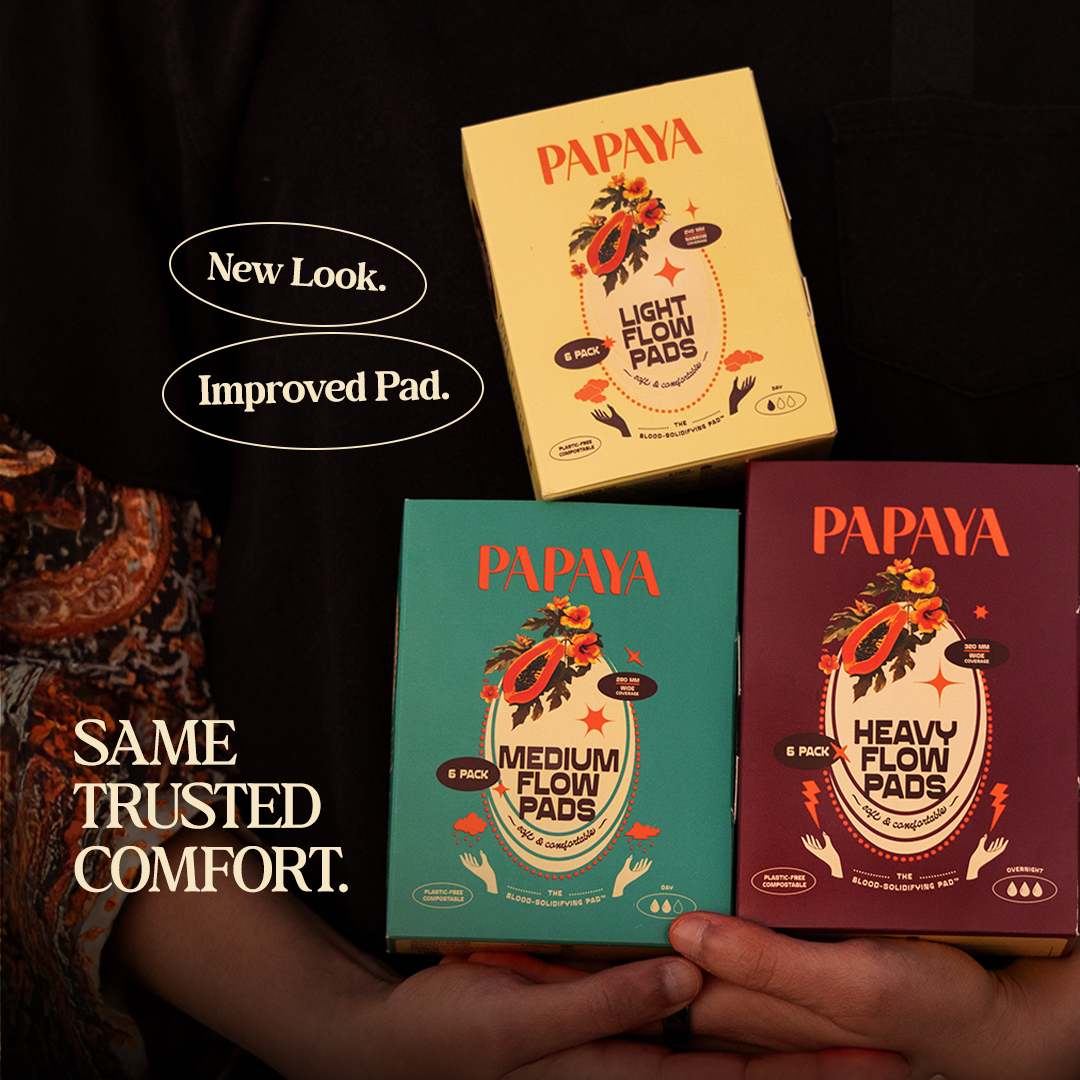
Papaya pads are fragrance-free in the full sense: no added fragrance, no masking compound to cover raw material smell. The organic cotton and cellulose construction doesn't need masking agents, because the materials don't carry the chemical odour that bleached pulp and synthetic polymers do.

Why this Matters for Intimate Health

The vaginal area and surrounding skin absorb topical substances more readily than most skin on the body. Synthetic fragrance compounds sitting against this area for six to eight hours aren't just resting on the surface.

Fragrance mixtures can contain dozens of individual chemicals, many of them known contact allergens. Fragrance is consistently among the most common causes of allergic contact dermatitis. Applied to intimate skin, reactions show up as itching, redness, swelling, or soreness in the contact area. Some of these compounds are also linked to endocrine disruption, relevant for something worn against hormonally sensitive tissue for hours daily.

These reactions can develop with "unscented" products too, because the masking fragrances used in them are chemically identical to the ones in openly scented products. If you've switched to unscented because of skin reactions and seen no improvement, this is likely why.

The Microbiome Connection

The vaginal microbiome, the Lactobacillus community that maintains vaginal health, pH balance, and natural odour control are all sensitive to chemical disruption.

Synthetic fragrance can alter vaginal pH and suppress Lactobacillus activity, giving anaerobic, odour-producing bacteria room to overgrow. This is how fragranced period pads end up worsening odour over time, by disrupting the biology that naturally controls it.

Papaya pads let the vaginal microbiome function without chemical interference. The biocoagulant layer's antimicrobial and antifungal properties support the intimate microbial environment instead of disrupting it, suppressing odour-generating bacteria without introducing synthetic fragrance to do it.

Reading Labels

Ingredient labelling isn't mandatory for pads in many markets, which makes this harder than it should be.

Look for "fragrance-free," "no fragrance," "no parfum," "no added fragrance." Be cautious with "unscented," "no scent," "odour-neutral", none of these rule out masking fragrance. Watch for "fresh," "deodorising," "clean scent," or "odour-neutralising" as these almost certainly contain fragrance, however subtle the smell.

A brand that's genuinely fragrance-free usually says so clearly. Nothing hidden, nothing requiring a masking agent.

What About "Natural Fragrance"?

Some products marketed as "natural" or "organic" use essential oils or botanical fragrance compounds instead of synthetic ones. These aren't safer for reactive skin.

Essential oils and botanical fragrances contain concentrated chemical compounds every bit as capable of triggering contact reactions as synthetic ones, and in some cases more so. "Natural fragrance" doesn't mean hypoallergenic.

The only designation that means no fragrance of any kind is "fragrance-free."

The Case for Fragrance-free as the Default

The intimate area doesn't benefit from synthetic perfume. The biological scent associated with menstruation isn't a hygiene failure, it's biology, best managed through pad design (breathability, fast absorption, biocoagulant-based fluid locking, antimicrobial properties) rather than through chemicals.

Fragrance in sanitary pads is a marketing choice, not a functional one. It creates a sense of freshness at the point of purchase. The people wearing the product daily pay for that choice.

Papaya pads are fragrance-free because freshness doesn't come from fragrance. It comes from organic cotton that breathes, a biocoagulant core that clots blood inside the pad and keeps the surface dry, and antimicrobial properties that suppress bacterial activity throughout wear. The absence of fragrance isn't a gap in the product. It's the point.

Quick Reference

Fragranced or scented: contains fragrance, not safe for sensitive skin. Fresh or deodorising: almost certainly contains fragrance, not safe for sensitive skin. Unscented: possibly contains masking fragrance, uncertain for sensitive skin. Fragrance-free: no fragrance chemicals, safe for sensitive skin.

Unscented means no smell. Fragrance-free means no fragrance chemicals. For intimate skin health, only the second label guarantees what you actually want.

Previous Post Next Post