×

How subscription works

1
Choose Your Plan

Select the quantity of packs you need each cycle.

2
Select Your Frequency

Set how often you would like them delivered.

3
Save every cycle

Enjoy exclusive savings on every subscription order.

4
Automated delivery

Your packs arrive at your doorstep, right when you need them.

5
Pause or cancel anytime

You will be charged automatically each month but you're in control, always.

×
10% OFF!
Say hello to your new favorite pad. Sign up and get 10% off your first order! Join our community <3
+91
Join Papaya!
×
FIRST10!
Use this code at checkout!
Copy coupon code
Why Do Period Pads Cause Rashes – Papaya Blood-Solidifying Pads Skip to content
Why Do Period Pads Cause Rashes

Why Do Period Pads Cause Rashes

Are period pads bad for skin? Most aren't built with skin health in mind. They're designed to absorb fluid efficiently, and manufacturers reach for synthetic materials because they're cheap and effective at that one job. Those same materials trap heat and moisture against skin for hours. Some people never notice. Others end up with redness, itching, or raw patches by the second day of their period.

Why do Period Pads Cause Rashes? 

A period pad rash is usually one of two things, sometimes both at once.

Mechanical irritation comes from friction and moisture. The pad rubs against skin during movement, especially once it's wet, and wears down the skin barrier the same way a stiff shoe wears down a heel. No immune system involved. Just physics.

Contact dermatitis is different. It's an immune reaction to a specific substance, your body literally reacting to a fragrance chemical, bleaching residue, a synthetic adhesive, something in the top sheet. It shows up as redness and itching concentrated in the contact area, and it can happen even with a single use if you're sensitive to the trigger.

Most people get some combination of the two. Figuring out which one is driving your reaction changes what you should switch to.

Why is Vulval Skin More Sensitive

Intimate skin is thinner and more permeable than skin on your arms or legs, and it sits close to mucous membranes that absorb chemicals faster than regular skin does. A fragrance compound that would barely register on your forearm can cause a reaction here in a few hours. That's the mechanism, not a guess. It's the same reason topical medications are often dosed lower for mucosal application than for skin elsewhere on the body.

Do Synthetic Pads Trap Heat

Yes. Most mainstream pads use a polypropylene nonwoven top sheet, and polypropylene doesn't breathe. Combine that with a plastic backsheet and you've sealed warm, moist air against skin for however many hours you're wearing it. The skin softens under that kind of prolonged moisture exposure and then this skin is far more easily damaged by friction or by whatever chemicals happen to be in the pad.

Plastic-free pads and breathable period pads address this directly. A cotton top sheet reduces friction because the fibres are gentler, and cotton also manages moisture better than polypropylene, so the surface stays drier. Drier skin is friction-resistant skin.

Should You Avoid Fragrance in Sanitary Pads

If you're prone to sanitary pad rash, yes. Synthetic fragrance is one of the most common contact allergens in personal care products generally, and in a pad it sits directly against skin and mucous membrane for hours at a stretch. Switching to a fragrance-free pad is the single fastest change most people can make, and it's often the one that shows results within a cycle.

There are Other Villains too: Bleaching and Adhesives

Conventional pads use wood pulp for the absorbent core, and that pulp is frequently bleached with chlorine compounds to get it white. The process can leave trace residues behind. In small amounts, against sensitive skin, for six or eight hours at a time, that's occasionally enough to trigger a reaction. The recent change from processed pulp to highly processed plastic based SAPs is no better. Superabsorbent polymers (SAPs) are major irritants and known endocrine disruptors.

Adhesive strips can cause the same kind of problem. They're meant to stay put against underwear, not skin, but they migrate, and the chemicals in adhesive are known irritants on prolonged contact.

There's also a less obvious factor: how the pad absorbs fluid in the first place. Conventional fluff pulp and even plastic based SAP cores saturate and then rewet the top sheet, so skin comes back into contact with moisture repeatedly through the day and every rewet is another round of friction and irritation. That’s where pads like Papaya have brought in a major change. By switching the core technology from absorption to coagulation technology which locks fluid into a gel structure instead, keeping the surface drier for longer and cutting down on that cumulative exposure.

What does "Hypoallergenic" Actually Mean

Less than you'd think. In most markets, "hypoallergenic" isn't a regulated term, so a pad can carry the label while still containing fragrance, synthetic fibres, and chlorine-bleached pulp or SAPs (Super absorbent polymers). The people most likely to reach for a pad marketed this way are those with eczema or psoriasis, people who run warm or sweat heavily during their period, anyone wearing pads with wings against the inner thigh for long stretches and they are exactly the people the label is least reliable for. The ingredients list tells you more than the front of the packaging ever will.

How to Choose a Skin-friendly Pad

If irritation keeps coming back, a few questions will tell you more than any marketing claim:

Is the top sheet plastic or plant-based? Does the pad contain added fragrance? Is the backsheet breathable, or fully sealed plastic? Was the pulp bleached with chlorine, and does the brand say so? Does the brand actually disclose full materials, or just use words like "soft" and "gentle"?

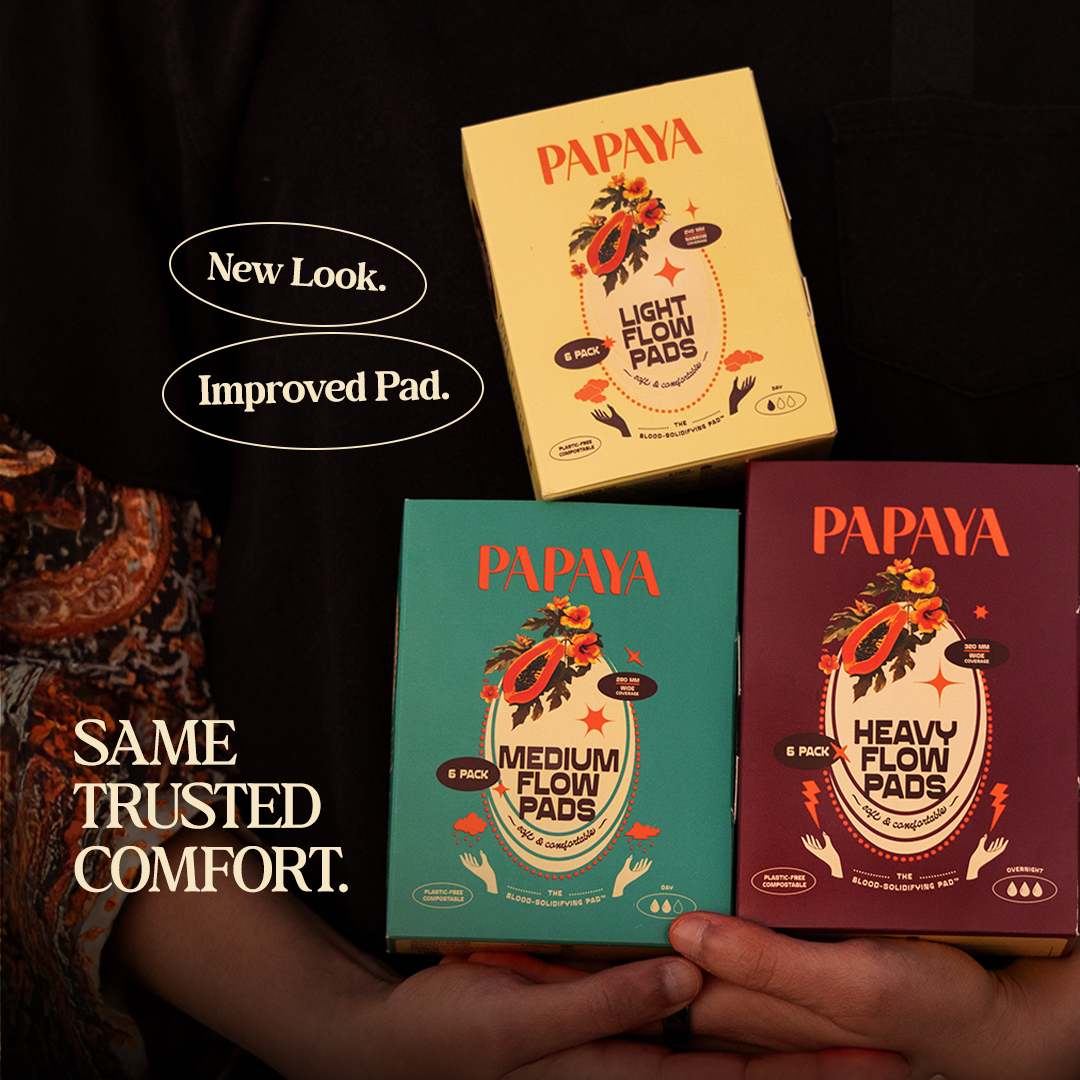
Papaya's pads are built around cotton top sheets, no added fragrance, and a breathable backsheet, specifically because these are the factors most linked to skin irritation. But the checklist above works regardless of which brand you're looking at. A pad that's genuinely designed for sensitive skin will hold up to those five questions. One that isn't, usually won't.