×

How subscription works

1
Choose Your Plan

Select the quantity of packs you need each cycle.

2
Select Your Frequency

Set how often you would like them delivered.

3
Save every cycle

Enjoy exclusive savings on every subscription order.

4
Automated delivery

Your packs arrive at your doorstep, right when you need them.

5
Pause or cancel anytime

You will be charged automatically each month but you're in control, always.

×
10% OFF!
Say hello to your new favorite pad. Sign up and get 10% off your first order! Join our community <3
+91
Join Papaya!
×
FIRST10!
Use this code at checkout!
Copy coupon code
Microplastics In Period Products: What We Know – Papaya Pads Skip to content

Microplastics In Period Products: What We Know

Microplastics, plastic particles under 5mm, have turned up in human blood, lung tissue, placenta, and breast milk in studies over the past several years. The evidence specific to period products is newer and thinner, but the exposure pathway, direct contact with intimate skin, is one researchers flag as worth more scrutiny.

Have Microplastics Been Found In Human Blood?

A 2022 study in the journal Environment International, led by researchers at Vrije Universiteit Amsterdam, detected microplastics in the blood of 17 of 22 healthy adult donors, one of the first studies to do so. A separate study, also published in Environment International, found microplastics in human placental tissue on both the maternal and fetal sides. Neither stutady looked at period products directly, but both establish that microplastic particles cross into systemic circulation and reach tissue well beyond the point of exposure.

Do Sanitary Pads Shed Microplastics?

Research on period products specifically shedding microplastics is more limited, and results have varied by brand and product type in the small studies that exist so far. This is an emerging area of research, not a settled one, and the specific health impact of microplastic exposure through period products hasn't been measured at scale.

Why Does Intimate Skin Absorb Differently Than Other Skin?

Most microplastic research has focused on ingestion, through food and water, or inhalation. Menstrual pads represent a different route: sustained, direct contact with mucous membrane and highly vascularized tissue. The vulvar and vaginal area absorbs topical substances more readily than skin on most of the rest of the body, which is why dermatologists and gynecologists generally recommend caution with what gets applied there. Whether that route carries the same or a different risk profile as ingestion or inhalation for microplastics specifically isn't established yet.

What Materials In A Conventional Pad Could Shed Microplastics?

A standard disposable pad's top sheet, backsheet, and often the absorbent core through SAP content are plastic-based. Polypropylene and polyethylene, the two most common polymers involved, can shed fibers and fragments through friction and movement during wear, the same mechanism documented in synthetic textile research more broadly.

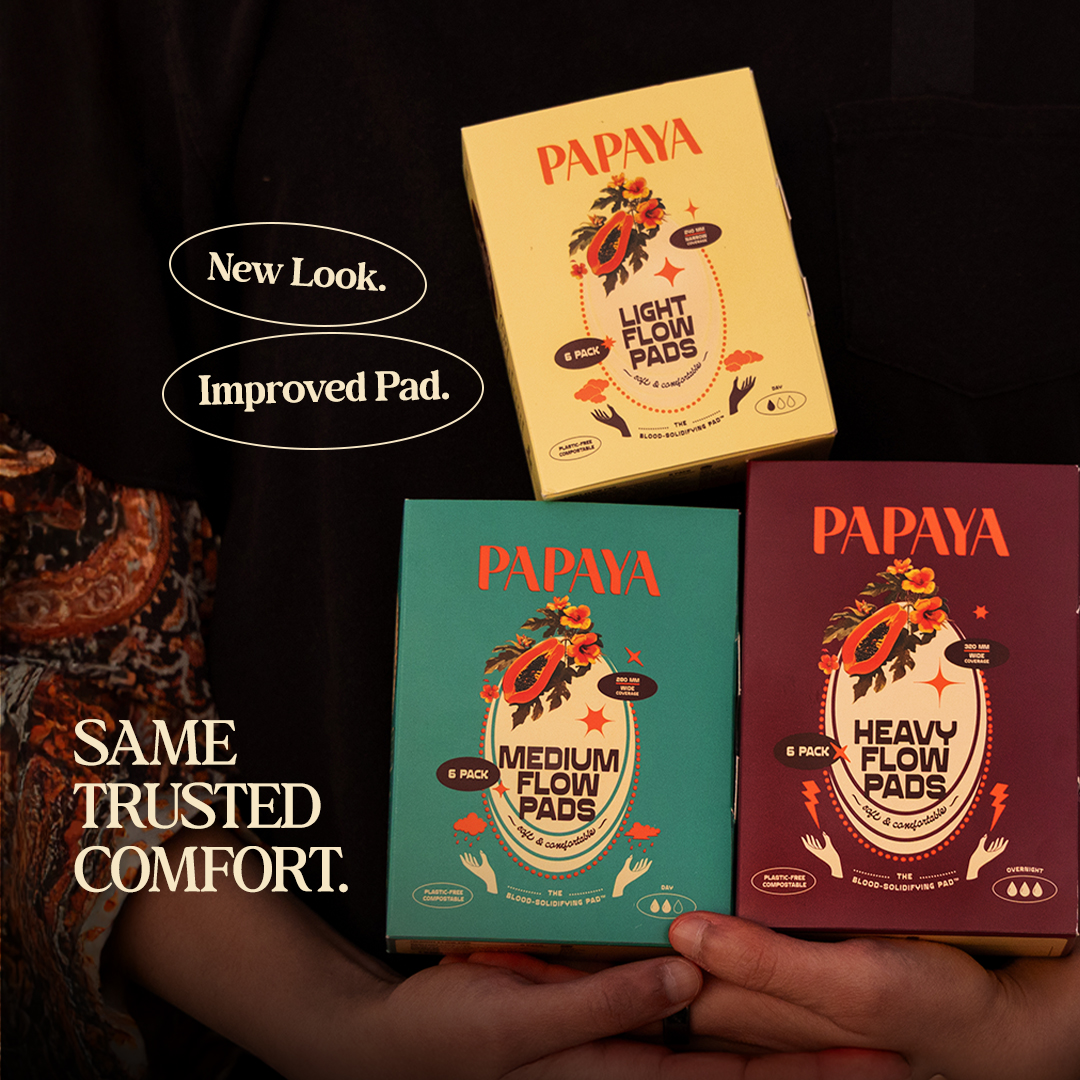
Period care stays in touch with the most permeable and sensitive skin of our body, the vulvar tissue for 6 to 8 hours for several days every month for decades, and such exposure to plastic is bound to result in microplastic absorption. Papaya built around this problem directly. Once the biocoagulant replaced absorption as the core mechanism, the next step was making sure the rest of the pad matched: no toxins, no plastic, sustainable materials throughout. The pad body is entirely biodegradable, and nothing in production uses fragrance or bleach. The top sheet is organic cotton and cellulose based with increased breathability and 100% biodegradable and so is the back sheet.

What Does The Research Not Yet Tell Us?

There's no large-scale study directly linking period product microplastic exposure to a specific health outcome. The research connects part of the picture: microplastics show up in materials used in period products, microplastics have been detected in human tissue elsewhere in the body, and intimate skin absorbs more readily than most skin. What's missing is a study that closes the loop with a direct measurement of period-product-specific uptake and a documented health effect. That gap is worth being upfront about.