×

How subscription works

1
Choose Your Plan

Select the quantity of packs you need each cycle.

2
Select Your Frequency

Set how often you would like them delivered.

3
Save every cycle

Enjoy exclusive savings on every subscription order.

4
Automated delivery

Your packs arrive at your doorstep, right when you need them.

5
Pause or cancel anytime

You will be charged automatically each month but you're in control, always.

×
10% OFF!
Say hello to your new favorite pad. Sign up and get 10% off your first order! Join our community <3
+91
Join Papaya!
×
FIRST10!
Use this code at checkout!
Copy coupon code
How To Read A Sanitary Pad Ingredient List – Papaya Pads Skip to content

How To Read A Sanitary Pad Ingredient List

Most sanitary pads don't carry a full ingredient list on the packaging, and in most markets they aren't required to. When a brand does disclose materials, here's what each line usually means and why it matters for vulval irritation, intimate skin comfort, and general menstrual pad ingredient safety.

What Does The Top Sheet Material Tell You

This is the layer touching your skin directly. Look for whether it's listed as polypropylene or polyethylene nonwoven, a synthetic, non-breathable fabric bonded from plastic fibers, versus cotton, organic cotton, or a cotton-cellulose blend. This is the single most consequential line for anyone dealing with sanitary pad rash or looking for pads for sensitive skin, since it's in constant contact with the body for the full wear time.

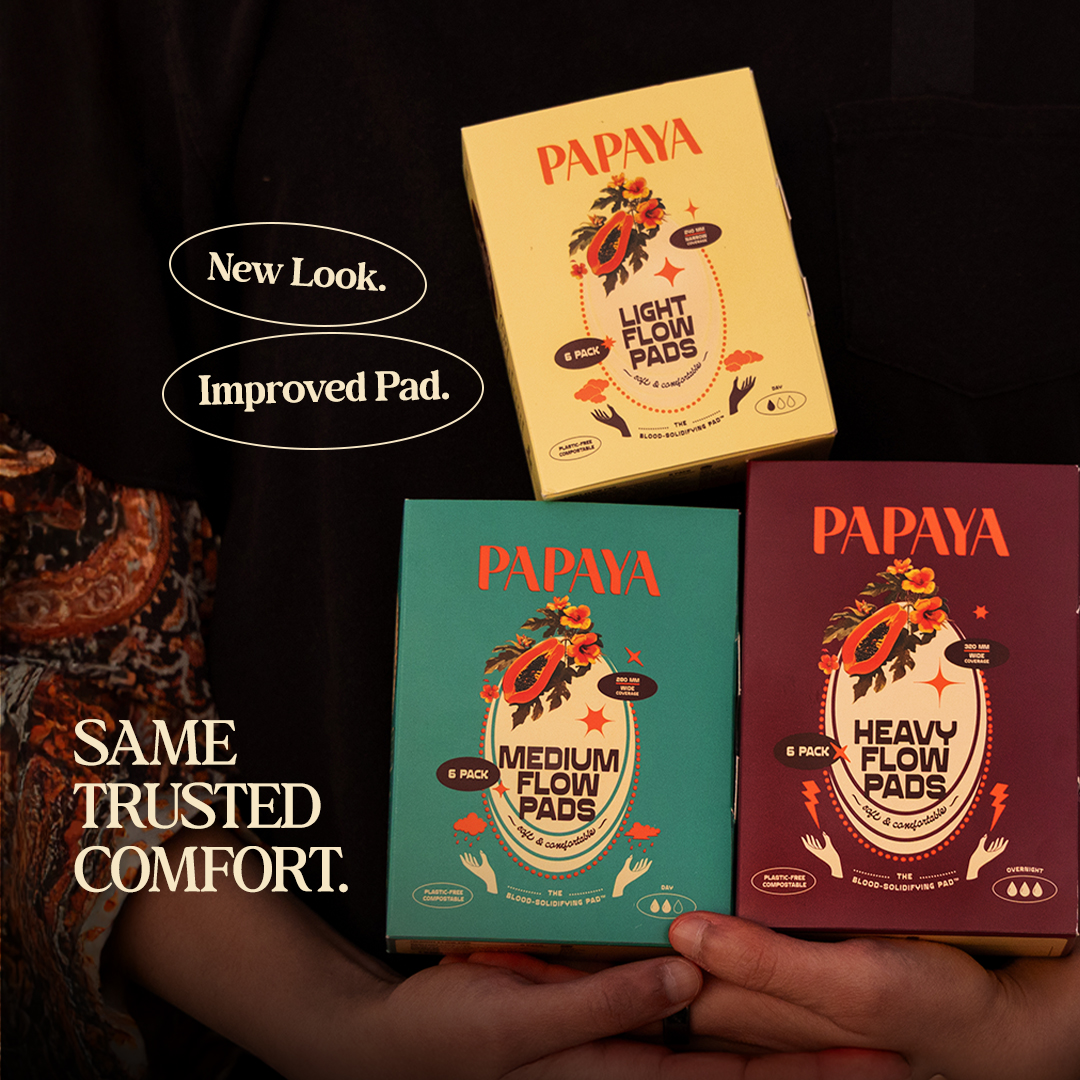
Papaya uses an organic cotton top sheet for this reason. No synthetic polymer fibres, no plastic film, none of the processing residue that comes with conventional nonwoven sheets.

What Makes The Absorbent Core?

Terms like fluff pulp, SAP, superabsorbent polymer, or sodium polyacrylate indicate a conventional absorption-based core, either plain wood pulp or pulp combined with synthetic gelling crystals. If a label just says "high absorbency" or "advanced core" with no further detail, it's usually conventional pulp and SAP, and is usually a chuckload of plastic. 

Papaya took a different route. The absorption mechanism that most pads rely on hasn't changed in decades and underperforms by design, so we changed it. In place of SAPs, Papaya pads use a patented natural biocoagulant in the core. Rather than absorbing fluid into a polymer crystal, the biocoagulant draws on blood's own ability to clot, causing menstrual blood to solidify inside the pad into a stable structure that stays dry to the touch, doesn't rewet under pressure, and needs no synthetic chemistry to hold. The core also uses cellulose, a plant-derived material, in place of plastic-laced alternatives. Making the pads plastic free and suitable for the sensitive vulvar skin. 

What Does The Backsheet Material Mean For Breathability

The backsheet is the outer layer facing your underwear, responsible for leak prevention. Polyethylene film is the conventional, non-biodegradable standard and generally not breathable. Breathable microporous film lets vapor through while blocking liquid, but is still usually plastic-based. Biodegradable backsheet or plant-based backsheet points to a non-plastic alternative worth checking for actual material and breakdown claims.

How Do You Know If A Pad Is Actually Fragrance-Free

Check for fragrance, parfum, or perfume in the ingredients, along with packaging claims like fresh scent or odor-neutralizing, which almost always indicate fragrance chemicals even without an explicit ingredient listing. Unscented doesn't guarantee fragrance-free, since masking fragrance can eliminate raw material smell without leaving a detectable scent. Only fragrance-free or no added fragrance rules out fragrance chemistry entirely.

What About Phthalates And Bleaching Agents

Phthalates, often used in fragrance formulations and some plastics, are linked to endocrine disruption. Phthalate-free is worth taking seriously as a claim if the brand also discloses full materials, since phthalates commonly enter a product through fragrance and plastic components a brand may not otherwise flag. Elemental chlorine-free or totally chlorine-free indicates reduced or eliminated chlorine byproducts.

Papaya pads use no plastic and no EDCs in any layer. The top sheet is organic cotton, the core runs on cellulose and a natural biocoagulant, and the backsheet is biodegradable rather than polyethylene. For sensitive skin this removes an entire category of chemical irritant from a product worn against the body's most reactive tissue.

Adhesive And Wrapping

Adhesive is rarely disclosed in detail; hotmelt adhesive is standard and generally low-exposure, since it sits at the pad's edges rather than the main skin-contact zone. Pads don’t usually mention details of primary packaging but those that do mention paper-based or plastic free wrapping along with complete disclosed ingredients list are worth a shot.

If a brand's disclosure stops at soft, gentle, or hypoallergenic without naming actual materials for the top sheet, core, and backsheet, that's a gap worth noticing. A pad worn six to eight hours, several days a month, for decades, is worth knowing the composition of. The more specific the disclosure, the easier it is to check the claims on the box against what's actually inside.

Previous Post Next Post