×

How subscription works

1
Choose Your Plan

Select the quantity of packs you need each cycle.

2
Select Your Frequency

Set how often you would like them delivered.

3
Save every cycle

Enjoy exclusive savings on every subscription order.

4
Automated delivery

Your packs arrive at your doorstep, right when you need them.

5
Pause or cancel anytime

You will be charged automatically each month but you're in control, always.

×
10% OFF!
Say hello to your new favorite pad. Sign up and get 10% off your first order! Join our community <3
+91
Join Papaya!
×
FIRST10!
Use this code at checkout!
Copy coupon code
What's Really Causing Period Odor – Papaya Blood-Solidifying Pads Skip to content

What's Really Causing Period Odor

Period odour is one of the most common concerns people have during their period, and one of the most poorly explained. The hygiene product industry has responded with fragrance and vague freshness claims, which hasn't helped anyone understand what's actually happening.

The Biology

Fresh menstrual blood barely smells. The odour that develops during your period isn't there the moment flow begins, it builds over time. It comes from a process, not from the blood itself.

That process is bacterial metabolism.

The intimate area hosts a carefully balanced microbial ecosystem. Under normal conditions, Lactobacillus species dominate, producing lactic acid and maintaining an acidic pH that keeps other organisms in check.

During your period, that balance shifts. Menstrual blood carries proteins, lipids, iron, and cellular debris creating an abundant food source for bacteria. It also raises vaginal pH from acidic toward neutral, which weakens Lactobacillus dominance and gives other bacterial species room to grow.

As these bacteria metabolise blood components, they release volatile organic compounds into the surrounding air. That's what you detect as odour. More bacterial activity, over more time, means a stronger smell.

Why the Pad Makes a Difference

The pad against your body isn't a passive collection device. It's an environment, and that environment directly affects how much odour-generating bacterial activity occurs.

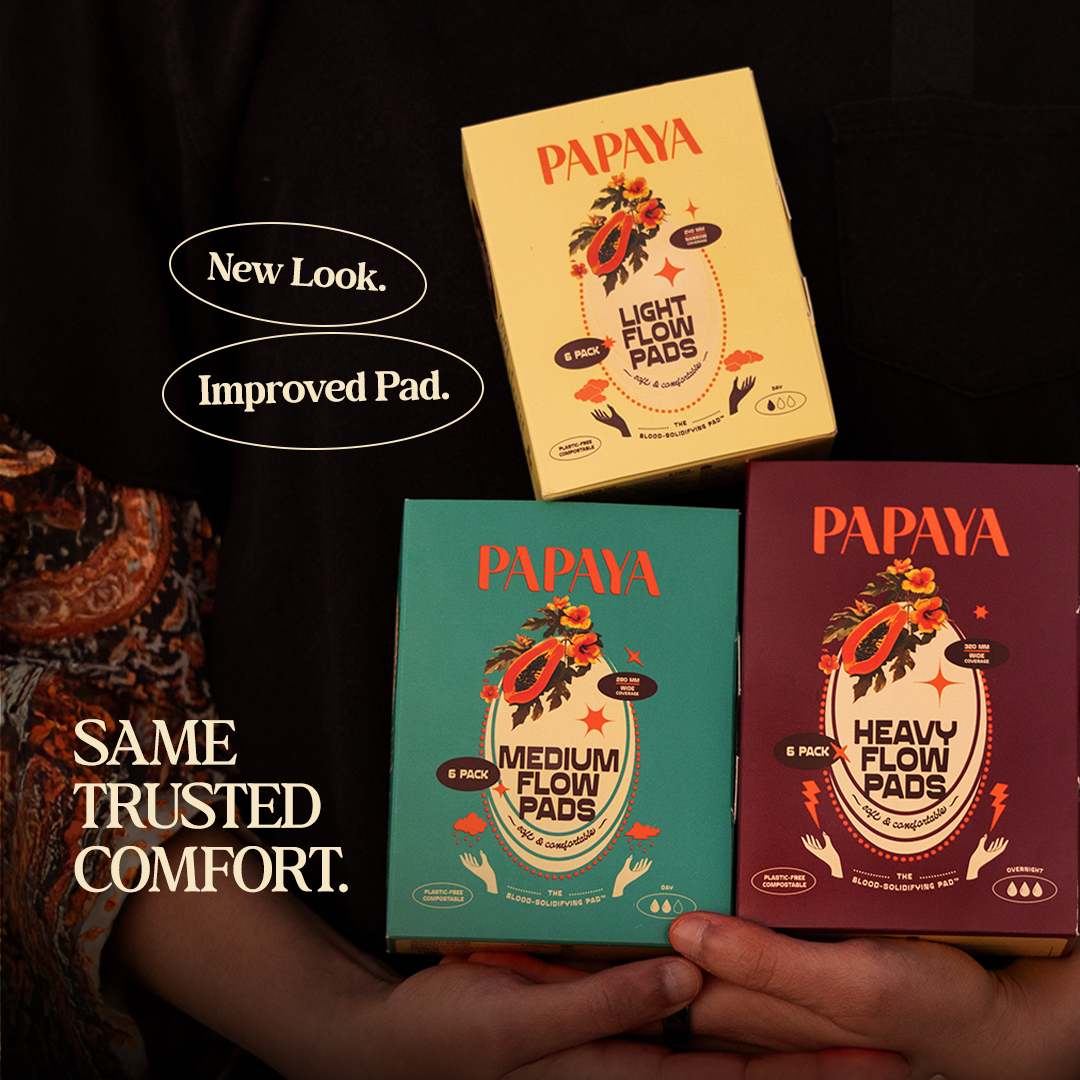
Bacteria work faster at higher temperatures. The warm, enclosed space between a pad and your body, especially with a non-breathable pad trapping heat, gives them good conditions. Papaya's organic cotton top sheet and plastic-free construction let heat dissipate instead of trapping it. Not dramatically cooler, but enough to meaningfully slow bacterial activity over several hours.

A pad that manages moisture well keeps the surface drier. Papaya's biocoagulant clots blood inside the pad instead of holding it as free liquid in a fibre matrix. Clotted blood is far less available for bacterial metabolism as the surface area exposed to air and bacteria drops sharply. Less available substrate means less bacterial activity means less odour. The biocoagulant layer also carries antimicrobial and antifungal properties that suppress the bacterial populations generating odour throughout wear. It's the most direct odour-management mechanism available in a pad, and it works through biology rather than fragrance chemistry.

No pad technology cancels out the relationship between time and odour. The longer blood sits at body temperature, the more bacterial breakdown has occurred. Regular changes, especially on heavier days, still matter. But Papaya pads slow the rate of odour generation throughout wear, and the difference shows up even before a change is due.

What Doesn't Cause Period Odour 

Poor hygiene doesn't cause it. Period odour happens regardless of how often you bathe. The bacteria producing it are naturally present in the intimate ecosystem, responding to the temporary shift menstruation causes, not to a cleanliness failure.

It's not specific to you. Everyone who menstruates experiences this to some degree. Variation relates to individual microbiome composition, flow volume, hormone levels, and pad quality, not hygiene habits.

And it's not the blood itself. Fresh blood barely smells. The odour builds as bacterial activity proceeds, which is why it's more noticeable toward the end of a pad-wearing stretch than at the start.

Why Fragrance is the Wrong Answer

If period odour comes from bacterial metabolism in a warm, moist environment, the fix is addressing those conditions. Fragrance addresses none of them. It layers a synthetic scent over the biological odour without touching any of the underlying causes.

Worse, synthetic fragrance can disrupt the Lactobacillus-dominated vaginal microbiome, encouraging anaerobic bacteria that produce stronger odours. A fragranced pad can end up worsening period odour while appearing to fix it.

Which is why unscented, no fragrance pads should be the norm. The microbiome functions without chemical interference, which is the body's own best odour management system.

What Actually Helps

In pads like Papaya organic cotton top sheet and breathable construction keep the intimate microenvironment cooler and less humid, slowing bacterial activity at the source. The biocoagulant converts absorbed blood into a stable clot, reducing the surface area available for bacterial metabolism throughout wear. Its antimicrobial and antifungal properties directly suppress the bacteria responsible for odour. Regular changes on heavy days limit total bacterial activity time. And no fragrance, for all the reasons above.

Period odour is normal, a biological process with a clear mechanism, and it affects everyone who menstruates. Decades of marketing have framed it as something shameful, usually while selling a product that makes things chemically worse. Understanding the actual biology points toward real solutions: breathable materials, smart absorption technology, and a pad built around how the body actually works.

Previous Post Next Post