×

How subscription works

1
Choose Your Plan

Select the quantity of packs you need each cycle.

2
Select Your Frequency

Set how often you would like them delivered.

3
Save every cycle

Enjoy exclusive savings on every subscription order.

4
Automated delivery

Your packs arrive at your doorstep, right when you need them.

5
Pause or cancel anytime

You will be charged automatically each month but you're in control, always.

×
10% OFF!
Say hello to your new favorite pad. Sign up and get 10% off your first order! Join our community <3
+91
Join Papaya!
×
FIRST10!
Use this code at checkout!
Copy coupon code
Can a Pad Be Both Ultra Thin and Highly Absorbent – Papaya Blood-Solidifying Pads Skip to content

Can a Pad Be Both Ultra Thin and Highly Absorbent

The intuition says no. Thin means less material, and less material means less absorption. Materials science says otherwise: a thin pad can match or beat a thick one, provided the technology inside is right.

Why the Assumption Exists

The intuition comes from how pads used to be made. For most of the history of menstrual pads, absorbency came from volume, specifically how much wood-fluff pulp was packed into the core. More pulp meant more capacity. If that were still the only mechanism, thinness and performance would genuinely conflict. It no longer is the only mechanism.

Super Absorbent Polymers

The development that changed this is superabsorbent polymer, or SAP technology. SAPs are synthetic crystals that absorb fluid by chemically binding it into a gel rather than soaking it into fibres. They can hold 30 to 60 times their own weight in fluid, and a thin SAP-blended core can match or exceed the capacity of a much thicker pulp-only core.

They work. They're also synthetic, petroleum-derived, and not biodegradable, which means microplastics and environmental persistence, and they sit directly in the absorbent layer of a product worn against vulvar skin for hours.

What conventional pads feel like on your period:

Coagulation Technology: A Different Path

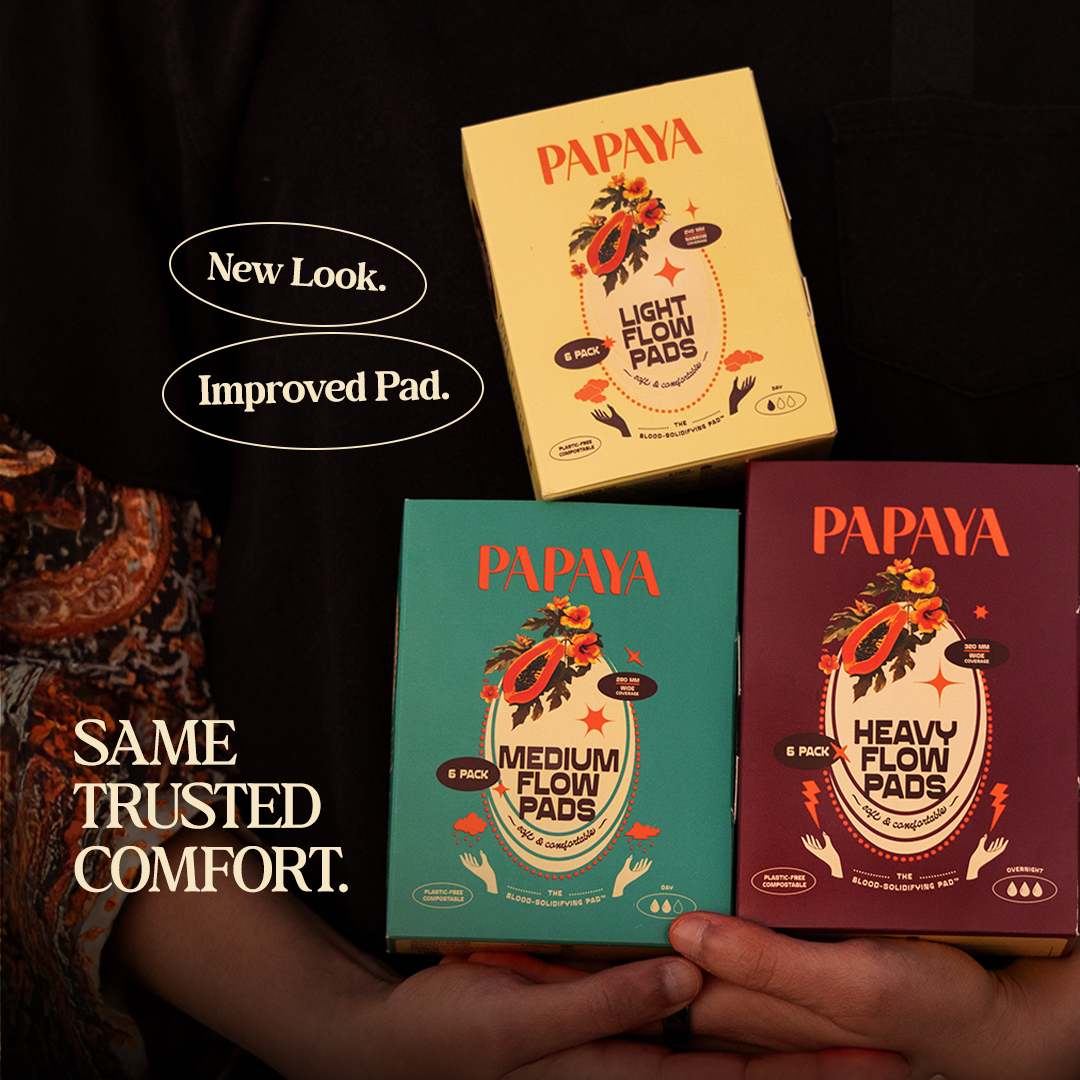
At Papaya we don't use either. The pad’s core runs on a patented natural biocoagulant, a plant-derived material that causes menstrual blood to clot inside the pad rather than simply holding it as liquid.

Where SAPs gel fluid into isolated synthetic crystal points, Papaya's biocoagulant turns absorbed blood into a stable, solid structure throughout the core, the same mechanism that forms a scab when you cut yourself, applied inside the pad. Immobilised blood doesn't migrate, doesn't rewet under compression, and doesn't need synthetic chemistry to hold. That's what lets a thin pad handle heavy flow.

How Papaya's Coagulation Technology pads feel like:

And to make sure these claims aren’t fluff, Papaya tests this with real blood rather than the blue saline solution standard across the industry, because the coagulation mechanism only works with actual blood. Performance on paper means nothing if it doesn't hold up in use.

The Real Advantages of Ultra Thin

The comfort difference is hard to describe until you've used a well-designed ultra-thin pad, but it's real. Thin pads don't bunch between the thighs the way thick ones can, useful if you've ever had a pad fold in half during a run or a long walk. They're less visible under fitted clothing. Less material also means less heat retention, so breathable ultra-thin pads manage temperature and moisture better than either thick pads or synthetic thin ones.

What Makes an Ultra Thin Pad Actually Work

Not every product labelled "ultra thin" performs the same. A thin pad with a weak core or poor fluid distribution fails exactly the way the old assumption predicts.

A pad that actually works needs an efficient core, a fluid acquisition layer that moves flow to the core before it can pool, a top sheet that wicks well without rewetting, and lateral distribution so the whole core surface gets used rather than just the centre.

Heavy Flow and Ultra Thin Pads

This is where scepticism runs highest, and where the technology makes its strongest case. The coagulation mechanism suits heavy flow well because it locks large volumes of blood quickly and avoids the saturation-and-rewet cycle that trips up conventional thick pads.

The relevant variable was never thickness. It's how efficiently the core captures and holds fluid under real use. Papaya's biocoagulant does that without bulk, without plastic, and without the synthetic chemistry conventional heavy pads rely on.

Choosing between thin comfort and real protection made sense when absorbency came only from bulk material. It doesn't anymore.

Previous Post Next Post