×

How subscription works

1
Choose Your Plan

Select the quantity of packs you need each cycle.

2
Select Your Frequency

Set how often you would like them delivered.

3
Save every cycle

Enjoy exclusive savings on every subscription order.

4
Automated delivery

Your packs arrive at your doorstep, right when you need them.

5
Pause or cancel anytime

You will be charged automatically each month but you're in control, always.

×
10% OFF!
Say hello to your new favorite pad. Sign up and get 10% off your first order! Join our community <3
+91
Join Papaya!
×
FIRST10!
Use this code at checkout!
Copy coupon code
What Is Coagulation Technology In A Papaya Pad? – Papaya Pads Skip to content

What Is Coagulation Technology In A Papaya Pad?

Most sanitary pads absorb menstrual fluid the way a sponge absorbs water: fluid soaks into a fiber structure and sits there as liquid until pressure pushes it back out. Coagulation technology takes a different starting point, working with blood's natural clotting response to help it thicken and localize within the pad rather than relying on absorption alone.

Why Does Absorption Alone Create Problems

Two absorption methods dominate the conventional pad market. Fluff pulp, the traditional wood-based material, soaks fluid into a fiber matrix where it's held loosely by surface tension. Under pressure, that liquid gets pushed back out, a failure known as rewet, which causes most unexpected leaks and the damp feeling that lingers even after a pad has technically absorbed your flow. 

Superabsorbent polymers, or SAPs, reduce rewet by gelling fluid into synthetic crystals instead of holding it loosely in fiber, but they're plastic, petroleum-derived, and non-biodegradable, sitting in the absorbent layer of a product worn against intimate skin for hours.

How Does Coagulation Technology Actually Work

The body has an effective mechanism for handling blood outside a vessel: clotting. When skin is cut, a cascade of proteins and platelets converts liquid blood into a stable clot within minutes. The Papaya pad’s coagulating layer draws on this same response, helping menstrual blood thicken and localize when it contacts the layer, rather than spreading and sitting as free liquid throughout the pad. This works alongside absorbent materials, not instead of them, combining coagulation and absorption rather than choosing one over the other.

How Is This Different From A Conventional Pad Under Pressure

Fluid held loosely in a fiber matrix releases liquid when compressed, the way a squeezed sponge does. But fluid that's thickened andclotted doesn't behave the same way, so sitting, walking, or sleeping doesn't push it back out as easily. This is the mechanical basis for the drier, less rewet-prone experience that Papaya pads are built around.

Why Did Papaya Build Its Pads Around This Mechanism

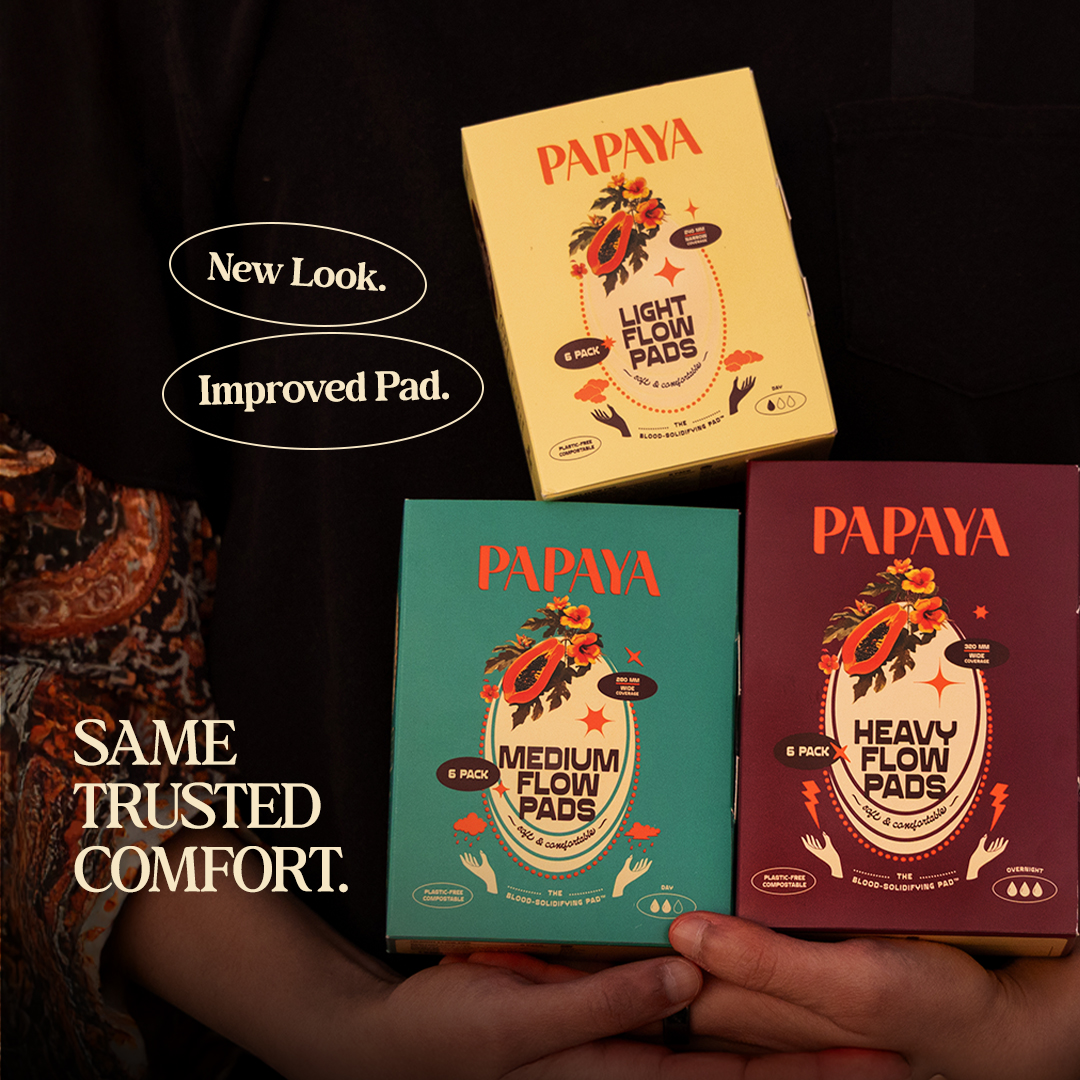
Papaya combined a coagulating layer with a plant-based, cotton and cellulose top sheet rather than a plastic nonwoven, aiming for a pad that feels drier and softer against skin while also being safer and better for the user and the planet.

The period care industry has been stuck on the mechanism of absorption for the past 100 years, with no innovation, no inventions to improve pad design or user experience. Papaya wanted to challenge that and change it. Making a better choice on one’s period shouldn’t be difficult and the reliance on plastics which are harmful not only for the body but the planet, also needed to be tackled. 

So the idea was to eliminate plastic from all layers of the pad, this meant rethinking the core of the pad. Blood has the natural tendency to clot, which is why a scab forms when you